
Home Repair Tools, Podcasting Equipment, Value Added Business Services, AppBuilder


Home Repair Tools, Podcasting Equipment, Value Added Business Services, AppBuilder
 How does your garden grow? If you’re into this trending method, the answer is sans any digging. “No-dig” gardening is a non-cultivation method of organic gardening that utilizes a layering technique in which organic material is layered on top of the soil, serving to protect and enhance its natural structure.
Practiced and promoted by famed English horticulturalist Charles Dowding since the 1980s, no-dig gardening has only recently gained notoriety. Known for its environmental benefits and physical ease, the method is finding favor with green thumbs and foodies alike.
The key to no-dig gardening lies in its name: there is no digging required. Instead, a layering of compost, soaked cardboard or newspaper, and manure serves as a foundation for your sowed seeds.
When left undisturbed, the soil sustains a healthy ecosystem in which both insects and microorganisms flourish. In turn, the soil retains more water, making it more drought resistant and in need of less frequent watering.
In addition to maintaining the soil’s microbiome (and demanding less physical labor), the no-dig method helps keep carbon in soil. Carbon-rich soil tends to be more fertile and less erosive, increasing its health and longevity—and that of your plants.
When disrupted, soil releases carbon, leading the carbon to enter the atmosphere as a potent greenhouse gas. No-dig gardening prevents these emissions by storing carbon that would otherwise be released should the soil be dug or tilled.
Cost-effective by nature, the no-dig method is also the perfect point of entry for those learning how to garden. In fact, you probably already have most of the required materials somewhere in your home. What’s more, the layers of cardboard and newspaper prevent weeds from growing by eliminating their access to sunlight, eliminating the need for harsh weed-killers and other chemically-based products.
The same goes for fertilizers. Each layer of the no-dig garden will break down, similar to compost. The remaining decomposed material is highly fertile and nutrient-dense, eliminating the need for artificial fertilizers.
Interested? Understandable. Read on for tips on starting your own no-dig garden at home.
You can really build your garden bed anywhere you’d like—your garden will succeed as long as it has access to soil. Opt for a lawn, raised beds (easily built from old fence posts or wooden palettes), or an upcycled container.
Pull up any weeds or grasses at your garden site. This will help you kick off your no-dig garden with a clean canvas.
Begin with your light-blocking material. As noted, cardboard or newspaper are good options here—with enough time and moisture, these layers will decompose into organic material. Be sure to wet your light-blocking layer before putting them down to expedite decomposition.
Next, add a thin layer of straw, followed by a layer of organic material—typically compost—which will serve as the main source of nutrients for your plants. You will want to reapply compost once or twice a year as your garden continues to grow.
Your final layer should consist of Mother Nature’s fertilizer: manure. Both cow manure and chicken manure are good options for home gardens, but chicken manure tends to be higher in nitrogen. If you choose to, you can top off the manure with a thin layer of straw, but this step is optional.
There are many different ways to layer your materials for a no-dig garden. Variations of the above steps are also acceptable and equally successful. Get creative! The options are endless.
Finally, use your hands to create small holes in the compost. Plant your seeds or crop starters in these holes, burying them about 10 centimeters down. Water where you’ve planted and watch your garden grow.
Be sure not to overly compact any of your layers. Keeping them loose and fluffy will encourage aeration and drainage, two key factors in maintaining healthy, self-sufficient soil. So stop your digging: No-dig gardening is one of the most sustainable gardening methods around.
Hey there! Want to help us change the world every day through easy, achievable, eco-friendly tips and tricks? Sign up for the Brightly Spot and join our movement of over a million changemakers.
© 2021 – Brightly
Log In (Staff Only)
Contact Us
Submit Feedback
Privacy Policy
Terms of Use
Disclosures
Our Mission
Submissions
Scouts Program
We’re Hiring!
source
https://4awesome.streamstorecloud.com/no-dig-gardening-is-greener-in-more-ways-than-one-heres-how-to-get-started-brightly/?feed_id=36390&_unique_id=6431e5b229d1d
How does your garden grow? If you’re into this trending method, the answer is sans any digging. “No-dig” gardening is a non-cultivation method of organic gardening that utilizes a layering technique in which organic material is layered on top of the soil, serving to protect and enhance its natural structure.
Practiced and promoted by famed English horticulturalist Charles Dowding since the 1980s, no-dig gardening has only recently gained notoriety. Known for its environmental benefits and physical ease, the method is finding favor with green thumbs and foodies alike.
The key to no-dig gardening lies in its name: there is no digging required. Instead, a layering of compost, soaked cardboard or newspaper, and manure serves as a foundation for your sowed seeds.
When left undisturbed, the soil sustains a healthy ecosystem in which both insects and microorganisms flourish. In turn, the soil retains more water, making it more drought resistant and in need of less frequent watering.
In addition to maintaining the soil’s microbiome (and demanding less physical labor), the no-dig method helps keep carbon in soil. Carbon-rich soil tends to be more fertile and less erosive, increasing its health and longevity—and that of your plants.
When disrupted, soil releases carbon, leading the carbon to enter the atmosphere as a potent greenhouse gas. No-dig gardening prevents these emissions by storing carbon that would otherwise be released should the soil be dug or tilled.
Cost-effective by nature, the no-dig method is also the perfect point of entry for those learning how to garden. In fact, you probably already have most of the required materials somewhere in your home. What’s more, the layers of cardboard and newspaper prevent weeds from growing by eliminating their access to sunlight, eliminating the need for harsh weed-killers and other chemically-based products.
The same goes for fertilizers. Each layer of the no-dig garden will break down, similar to compost. The remaining decomposed material is highly fertile and nutrient-dense, eliminating the need for artificial fertilizers.
Interested? Understandable. Read on for tips on starting your own no-dig garden at home.
You can really build your garden bed anywhere you’d like—your garden will succeed as long as it has access to soil. Opt for a lawn, raised beds (easily built from old fence posts or wooden palettes), or an upcycled container.
Pull up any weeds or grasses at your garden site. This will help you kick off your no-dig garden with a clean canvas.
Begin with your light-blocking material. As noted, cardboard or newspaper are good options here—with enough time and moisture, these layers will decompose into organic material. Be sure to wet your light-blocking layer before putting them down to expedite decomposition.
Next, add a thin layer of straw, followed by a layer of organic material—typically compost—which will serve as the main source of nutrients for your plants. You will want to reapply compost once or twice a year as your garden continues to grow.
Your final layer should consist of Mother Nature’s fertilizer: manure. Both cow manure and chicken manure are good options for home gardens, but chicken manure tends to be higher in nitrogen. If you choose to, you can top off the manure with a thin layer of straw, but this step is optional.
There are many different ways to layer your materials for a no-dig garden. Variations of the above steps are also acceptable and equally successful. Get creative! The options are endless.
Finally, use your hands to create small holes in the compost. Plant your seeds or crop starters in these holes, burying them about 10 centimeters down. Water where you’ve planted and watch your garden grow.
Be sure not to overly compact any of your layers. Keeping them loose and fluffy will encourage aeration and drainage, two key factors in maintaining healthy, self-sufficient soil. So stop your digging: No-dig gardening is one of the most sustainable gardening methods around.
Hey there! Want to help us change the world every day through easy, achievable, eco-friendly tips and tricks? Sign up for the Brightly Spot and join our movement of over a million changemakers.
© 2021 – Brightly
Log In (Staff Only)
Contact Us
Submit Feedback
Privacy Policy
Terms of Use
Disclosures
Our Mission
Submissions
Scouts Program
We’re Hiring!
source
https://4awesome.streamstorecloud.com/no-dig-gardening-is-greener-in-more-ways-than-one-heres-how-to-get-started-brightly/?feed_id=36390&_unique_id=6431e5b229d1d
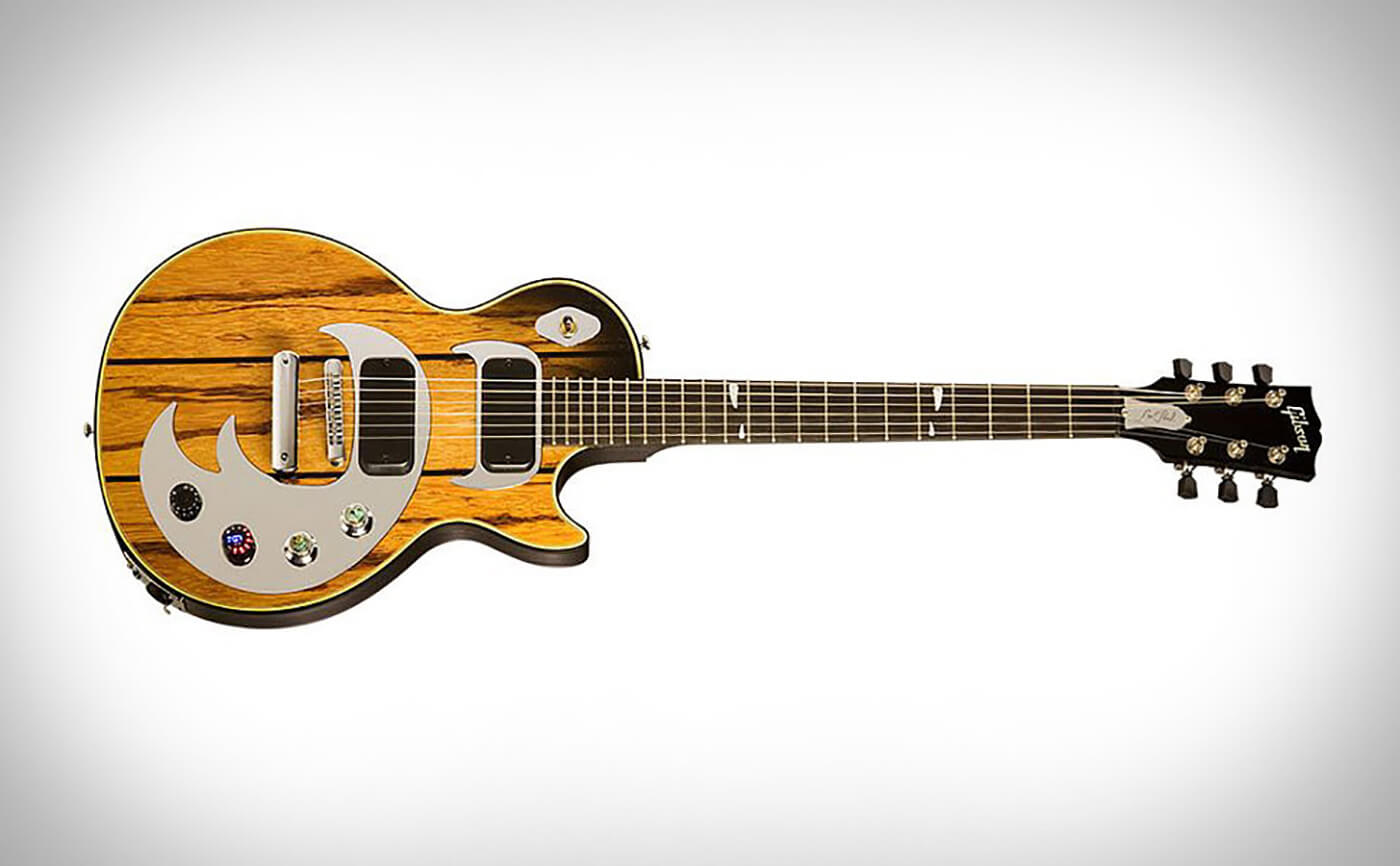
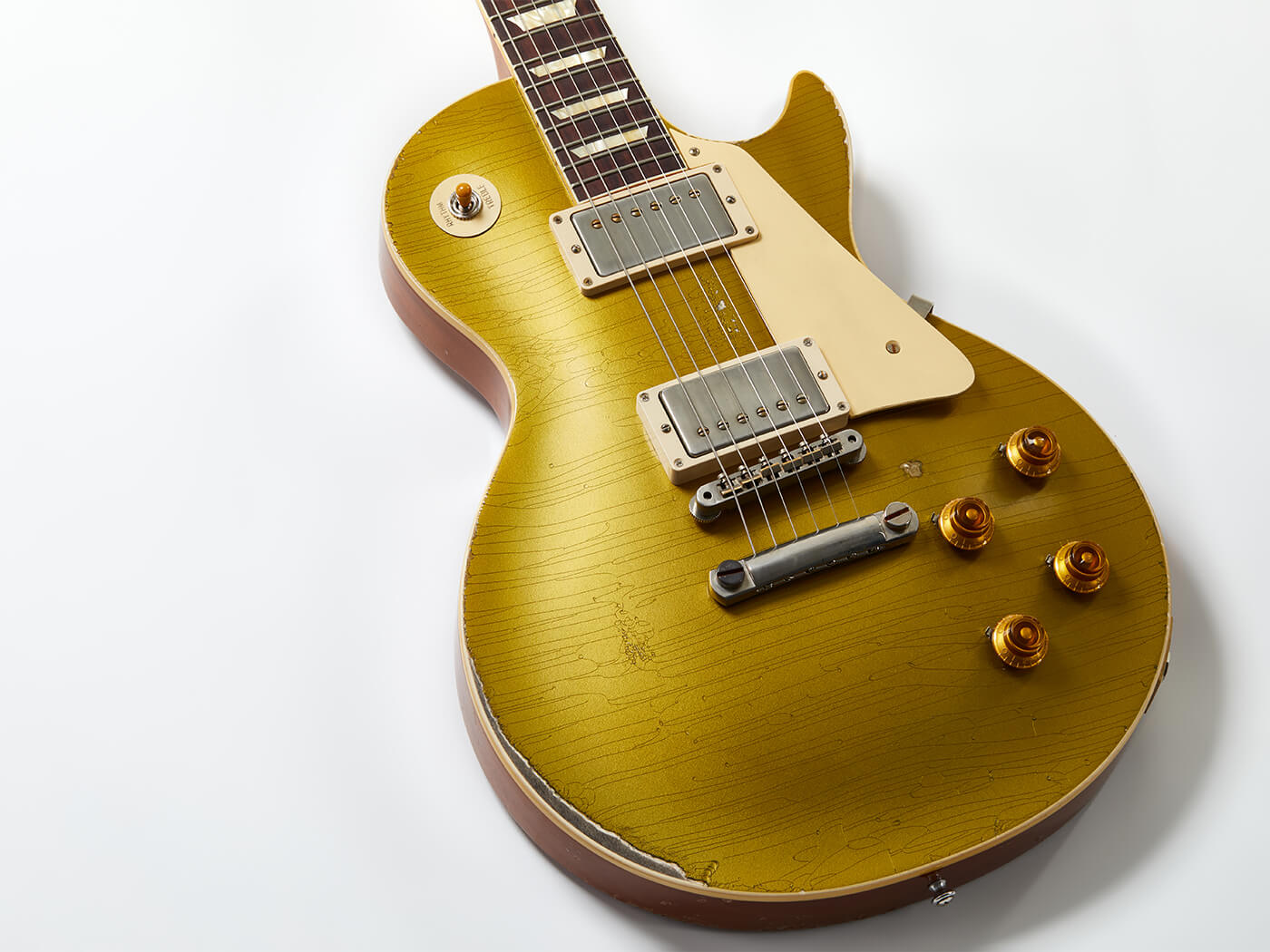
 It’s one of the oldest guitar makers still in existence, but the journey from Orville Gibson’s hobby to a world-straddling brand has been a rollercoaster to say the least.
In addition to being one of the world’s ‘big two’ electric guitar brands – along with Fender, whose fame and recognition have transcended the guitar sphere and become household names – Gibson is also one of the oldest American musical instrument manufacturers, with a history dating all the way back to 1894.
In the century or so since, the brand has changed dramatically, evolving with the times and adapting to changes in music, establishing a global reputation for innovation and quality. It’s not all been smooth sailing, and there’s certainly been some times when the brand has found itself in hot water, but it endures today as an icon of American culture.
As renowned as Gibson has become, it’s hard to imagine that it all started as Orville Gibson’s part-time hobby! He worked a variety of part-time jobs in order to fund his true passion – handcrafting musical instruments.
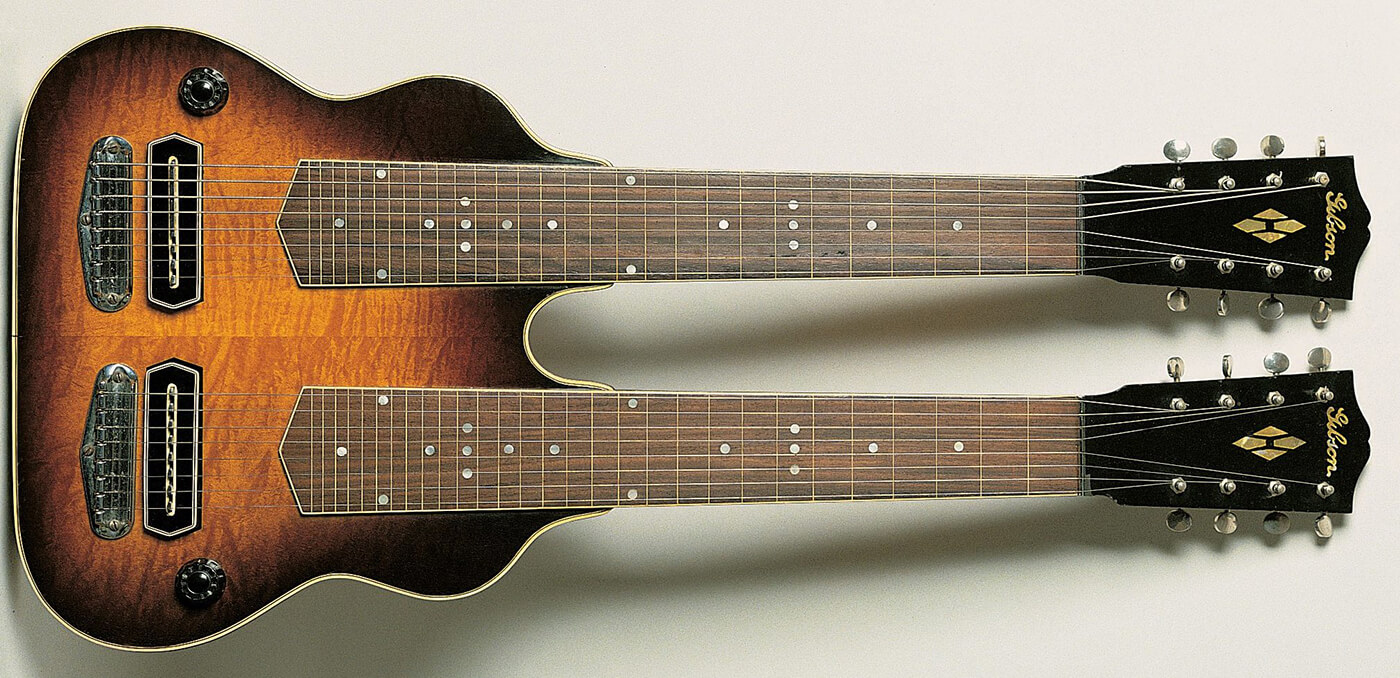
Orville began building acoustic guitars and mandolins in his Kalamazoo, Michigan shop in 1894. He pioneered a guitar design that featured a carved, hollow top with an oval sound hole that would become the standard for the archtop guitar. It didn’t take long for demand of his handcrafted creations to take off and so in 1902 he secured the financing to form the Gibson Mandolin-Guitar Manufacturing Company.
Sadly, he would pass away in 1918 without being able to see much of the success his namesake company would come to have.
It’s one of the oldest guitar makers still in existence, but the journey from Orville Gibson’s hobby to a world-straddling brand has been a rollercoaster to say the least.
In addition to being one of the world’s ‘big two’ electric guitar brands – along with Fender, whose fame and recognition have transcended the guitar sphere and become household names – Gibson is also one of the oldest American musical instrument manufacturers, with a history dating all the way back to 1894.
In the century or so since, the brand has changed dramatically, evolving with the times and adapting to changes in music, establishing a global reputation for innovation and quality. It’s not all been smooth sailing, and there’s certainly been some times when the brand has found itself in hot water, but it endures today as an icon of American culture.
As renowned as Gibson has become, it’s hard to imagine that it all started as Orville Gibson’s part-time hobby! He worked a variety of part-time jobs in order to fund his true passion – handcrafting musical instruments.
Orville began building acoustic guitars and mandolins in his Kalamazoo, Michigan shop in 1894. He pioneered a guitar design that featured a carved, hollow top with an oval sound hole that would become the standard for the archtop guitar. It didn’t take long for demand of his handcrafted creations to take off and so in 1902 he secured the financing to form the Gibson Mandolin-Guitar Manufacturing Company.
Sadly, he would pass away in 1918 without being able to see much of the success his namesake company would come to have.

 Sign in
An earlier version of this story incorrectly stated that the largest crop in the continental U.S. is turf grass. It is the largest irrigated crop. The story has been corrected.
Lawns, still, somehow.
The planet has accelerated its revolt against us and still we tend our lawns, one part of Earth we can control. Society falters, resources dwindle and, still, lawns.
Lawns: burned out, blond and dead, in the air fryer of August. Lawns: emerald green — no, alien green — and kept that way by maniacal vigilance and an elaborate system of pipes and potions, organic and otherwise, in defiance of ecology. And for what? To have, in this chaos, dominion over something? (Lawn and order?) To drape a veil of verdancy over a world gone to seed? To feel equal or superior to Ron, across the street, whose lawn always looks like the 18th at Pebble Beach?
We’ve been sweeping our anxieties under these green comfort blankets for quite some time. A “smooth, closely shaven surface of grass is by far the most essential element of beauty on the grounds of a suburban home,” wrote Frank J. Scott in 1870, around the time of the first lawn mower patent, in a book titled “The Art of Beautifying Suburban Home Grounds of Small Extent” (Chapter XIII: The Lawn).
“For ‘setting off’ both the house and the landscape, planting a good lawn is of vital importance,” declared a caption in the New York Times in 1937.
Around that time, during the Great Depression, the Mattei family in Cincinnati did not have a lawn. They had a yard, and the yard was functional. It was for the chickens and tomato plants. It was not for grass. One of the Matteis, Vic, used the GI Bill to get to graduate school and become a research scientist. He made a family of his own in the Philadelphia suburb of Cinnaminson, N.J., in a subdivision that paved over Quaker farmland to accommodate Americans who were tinkering with the Aegis radar system for the nearby RCA Corp. Everyone in the subdivision had a lawn, of course. What was the American Dream, in the 20th century, if it wasn’t aproned by a quarter acre of Kentucky bluegrass or tall fescue, which is good for recreation and admiration and not much else?
Vic had some token vegetable plants on the property, but the yard was not for survival. The yard was for lawn, and the lawn was for mowing.
“He was mowing the lawn every Saturday,” says Vic’s daughter, Edamarie Mattei. “And that was success: Having the lawn. Mowing the lawn.”
That was the 1970s.
It is now a half-century later. Specifically Friday, Aug. 12, 2022. Mattei, a landscape designer, is standing on a lawn in a leafy crook of Bethesda, Md. She is talking to the owner of the lawn about getting rid of it.
“It contributes nothing,” says M.J. Veverka about her lawn, which she’s watered and weeded and mowed for 31 years — and for what? The lawn is static, nonfunctional, tedious. Last year Veverka filled in her backyard pool, removed the surrounding lawn and enlisted Mattei’s company to turn the space into an oasis of native plants, a “homegrown national park,” in the words of a grass-roots movement for regenerating biodiversity. Veverka so loves the backyard — which is now an evolving work of horticultural art and a functioning component of the surrounding ecosystem — that she wants to do the same thing with her front yard.
Step one: Get thee gone, lawn.
Mattei used to spend more time educating clients about the benefits of turf removal and native plantings; in the past two years, for whatever reason, new clients have started coming to her with those very ideas. Maybe quarantine amplified the sameness of lawns. Maybe, in this climate-conscious era, we are thinking outside the strict geometry of the lawn, which Mattei describes as “ecologically dead” — a “monoculture” in a world that needs biodiversity.
Over a century, from around the 1870s to the 1970s, Americans slowly fell in love with lawns. Lawns were a sign of taste, calm, power, privilege, order, discipline, especially in the aftermath of World War II.
“On the American front lawn men use power machinery and chemicals, the tools of war, to engage in a battle for supremacy with Mother Nature,” writes Virginia Scott Jenkins in her book “The Lawn: A History of an American Obsession.”
Over the past 50 years, we’ve slowly fallen out of love with lawns. They began to signal waste, disregard, disharmony, homogeneity, gentrification, zombie Boomerism.
“Wasn’t there something a bit decadent about millions of Americans applying millions of pounds of fertilizer and pouring millions of gallons of water on the ground to grow something you couldn’t eat unless you were a Jersey cow?” columnist Ellen Goodman wrote in the Boston Globe all the way back in 1977. “Wasn’t there something bizarre about their spending millions of gallons to cut it off?”
“I think we’re growing up as a country,” Mattei says. “For a lot of American history, it seemed like we had boundless access to land, and we kept extracting from it and building on it. I see a real change from looking at land as a demonstration of power or success to looking at land as a precious resource.”
She adds: “When we are lawn people, we are one thing. When we are not lawn people, we are another thing.”
We are still, largely, lawn people. The biggest irrigated crop, by area, in the United States? Not corn, or soybean, but lawn. Unproductive, ornamental lawn: around 40 million acres of it, or 2 percent of the land area of the Lower 48, according to multiple estimates cited by Garik Gutman, program manager for NASA’s Land-Cover/Land-Use Change Program.
Forty million acres: The entire state of Georgia couldn’t contain America’s total lawnage. And we pour 9 billion gallons of water on landscaping every day, according to the Environmental Protection Agency. Meanwhile the Southwest United States is enduring a megadrought; the past two decades constitute its driest period since the year 800. California Gov. Gavin Newsom declared a drought state of emergency in October. In a world thirsty for water, lawns are a sneaky siphon.
These days we have “No Mow May,” where neighbors test each other’s tolerance for nonconformity. We have Twitter users sharing before-and-after photos of their “war on lawns,” which turn flat slabs of sickly green into colorful kingdoms of billowing flora. We have a channel on Reddit called NoLawns and TikTok hashtags such as #antilawn, which might direct you to a performance of a profane anti-lawn song by a 27-year-old Nashville musician named Mel Bryant.
“At the time, all of my neighbors were obsessed with their lawns,” says Bryant, who wrote the song on Earth Day 2020. “Everyone was mowing constantly, every day. At any point in time you’d hear lawn mowers going. And it drove me fricking insane. I still have this one neighbor who, I swear, on the Fourth of July he was mowing at 7:30 p.m. What are you doing, dude? This can wait.”
Bryant’s song racked up tens of thousands of views, spreading through TikTok’s #cottagecore hashtag, where younger people advertise their cozy, quaint, sustainable, back-to-nature ethos.
“Everyone’s got the perfect lawn,” Bryant says of her street, in the Rosebank area of Nashville. “They seed their lawns. They have sprinklers and s---. I think it’s attached to a more old-school, boomer generation of the idea of what an American life is. And our lawn …” Well, Bryant has let it grow wild. “I do think it’s pretty generational. I’ve definitely noticed in the past few years that so many people around my age are getting into gardening, and taking their lawns and turning them into gardens.”
Walt Whitman wrote of grass in 1855: “I guess it must be the flag of my disposition, out of hopeful greenstuff woven.”
Said Hank Hill, fictional Texas propane salesman, in 1997: “Look, some people hoist a flag to show they love our country. Well, my lawn is my flag.”
But lawn has become a liability — or in some cases an asset, on the condition of its removal. California’s main water utility is paying customers between $2 and $5 for each square foot of living turf that they remove. Last year Nevada outlawed certain types of lawn; rather, the state legislature prohibited the use of water from the dribbling Colorado River to feed certain types of “nonfunctional turf,” which in southern Nevada slurps up to 12 billion gallons of water every year (more than 10 percent of the state’s usage of the river). The law created a committee to sort “functional” turf from “nonfunctional”; discussions were had about how to categorize “pet relief” areas and “wedding lawns at golf courses.”
Before the law passed, Sun City Anthem, an active-adult community in Henderson, Nev., had already removed almost 40,000 square feet of grass, which nearly halved its water bill. Larry Fossan, facility manager and landscape supervisor, replaced the lawn with xeriscaping: native plants like lantana, cactuses, Mexican feathergrass. Last year on the property Fossan saw something he’d never seen before in Nevada: monarch butterflies, about 25 of them, migrating through.
“There’s flowers, color, butterflies, hummingbirds,” Fossan says of lawnless living. “Different parts of the day you see different things. We have boulders so people can sit and be part of the landscape. When we had grass, people just walked into the building, but now they’ll stop and ‘ooh’ and ‘ah.’ Landscaping is meant to be interactive. It’s meant to be part of your life.”
Lawns, of course, are part of your life. You throw a football on them, you picnic on them, you lean and loaf on them. Some years ago Dave Marciniak penned a polite defense of lawns on his landscape company’s blog: “Why the anti-lawn movement bugs me a little.” Turf serves a purpose, he wrote. It’s soft and durable for recreation. It provides visual relief for the eye, and contrast for landscaping.
Marciniak welcomes changing landscaping tastes, but notes that they are changing slowly.
“As much as Americans like to call themselves rugged individuals, there’s a lot of looking around to see what other people are doing,” says Marciniak, who lives in Culpeper, Va. “I explain to people advocating anti-lawn: Look, it’s not going to happen overnight. If you want to get people away from lawns, we have to show them it can be beautiful, it can be desirable.” And perhaps, most importantly: “It can make the neighbors jealous.”
source
https://4awesome.streamstorecloud.com/lawns-are-they-worth-it-anymore-the-washington-post/?feed_id=36358&_unique_id=642c9f978dd91
Sign in
An earlier version of this story incorrectly stated that the largest crop in the continental U.S. is turf grass. It is the largest irrigated crop. The story has been corrected.
Lawns, still, somehow.
The planet has accelerated its revolt against us and still we tend our lawns, one part of Earth we can control. Society falters, resources dwindle and, still, lawns.
Lawns: burned out, blond and dead, in the air fryer of August. Lawns: emerald green — no, alien green — and kept that way by maniacal vigilance and an elaborate system of pipes and potions, organic and otherwise, in defiance of ecology. And for what? To have, in this chaos, dominion over something? (Lawn and order?) To drape a veil of verdancy over a world gone to seed? To feel equal or superior to Ron, across the street, whose lawn always looks like the 18th at Pebble Beach?
We’ve been sweeping our anxieties under these green comfort blankets for quite some time. A “smooth, closely shaven surface of grass is by far the most essential element of beauty on the grounds of a suburban home,” wrote Frank J. Scott in 1870, around the time of the first lawn mower patent, in a book titled “The Art of Beautifying Suburban Home Grounds of Small Extent” (Chapter XIII: The Lawn).
“For ‘setting off’ both the house and the landscape, planting a good lawn is of vital importance,” declared a caption in the New York Times in 1937.
Around that time, during the Great Depression, the Mattei family in Cincinnati did not have a lawn. They had a yard, and the yard was functional. It was for the chickens and tomato plants. It was not for grass. One of the Matteis, Vic, used the GI Bill to get to graduate school and become a research scientist. He made a family of his own in the Philadelphia suburb of Cinnaminson, N.J., in a subdivision that paved over Quaker farmland to accommodate Americans who were tinkering with the Aegis radar system for the nearby RCA Corp. Everyone in the subdivision had a lawn, of course. What was the American Dream, in the 20th century, if it wasn’t aproned by a quarter acre of Kentucky bluegrass or tall fescue, which is good for recreation and admiration and not much else?
Vic had some token vegetable plants on the property, but the yard was not for survival. The yard was for lawn, and the lawn was for mowing.
“He was mowing the lawn every Saturday,” says Vic’s daughter, Edamarie Mattei. “And that was success: Having the lawn. Mowing the lawn.”
That was the 1970s.
It is now a half-century later. Specifically Friday, Aug. 12, 2022. Mattei, a landscape designer, is standing on a lawn in a leafy crook of Bethesda, Md. She is talking to the owner of the lawn about getting rid of it.
“It contributes nothing,” says M.J. Veverka about her lawn, which she’s watered and weeded and mowed for 31 years — and for what? The lawn is static, nonfunctional, tedious. Last year Veverka filled in her backyard pool, removed the surrounding lawn and enlisted Mattei’s company to turn the space into an oasis of native plants, a “homegrown national park,” in the words of a grass-roots movement for regenerating biodiversity. Veverka so loves the backyard — which is now an evolving work of horticultural art and a functioning component of the surrounding ecosystem — that she wants to do the same thing with her front yard.
Step one: Get thee gone, lawn.
Mattei used to spend more time educating clients about the benefits of turf removal and native plantings; in the past two years, for whatever reason, new clients have started coming to her with those very ideas. Maybe quarantine amplified the sameness of lawns. Maybe, in this climate-conscious era, we are thinking outside the strict geometry of the lawn, which Mattei describes as “ecologically dead” — a “monoculture” in a world that needs biodiversity.
Over a century, from around the 1870s to the 1970s, Americans slowly fell in love with lawns. Lawns were a sign of taste, calm, power, privilege, order, discipline, especially in the aftermath of World War II.
“On the American front lawn men use power machinery and chemicals, the tools of war, to engage in a battle for supremacy with Mother Nature,” writes Virginia Scott Jenkins in her book “The Lawn: A History of an American Obsession.”
Over the past 50 years, we’ve slowly fallen out of love with lawns. They began to signal waste, disregard, disharmony, homogeneity, gentrification, zombie Boomerism.
“Wasn’t there something a bit decadent about millions of Americans applying millions of pounds of fertilizer and pouring millions of gallons of water on the ground to grow something you couldn’t eat unless you were a Jersey cow?” columnist Ellen Goodman wrote in the Boston Globe all the way back in 1977. “Wasn’t there something bizarre about their spending millions of gallons to cut it off?”
“I think we’re growing up as a country,” Mattei says. “For a lot of American history, it seemed like we had boundless access to land, and we kept extracting from it and building on it. I see a real change from looking at land as a demonstration of power or success to looking at land as a precious resource.”
She adds: “When we are lawn people, we are one thing. When we are not lawn people, we are another thing.”
We are still, largely, lawn people. The biggest irrigated crop, by area, in the United States? Not corn, or soybean, but lawn. Unproductive, ornamental lawn: around 40 million acres of it, or 2 percent of the land area of the Lower 48, according to multiple estimates cited by Garik Gutman, program manager for NASA’s Land-Cover/Land-Use Change Program.
Forty million acres: The entire state of Georgia couldn’t contain America’s total lawnage. And we pour 9 billion gallons of water on landscaping every day, according to the Environmental Protection Agency. Meanwhile the Southwest United States is enduring a megadrought; the past two decades constitute its driest period since the year 800. California Gov. Gavin Newsom declared a drought state of emergency in October. In a world thirsty for water, lawns are a sneaky siphon.
These days we have “No Mow May,” where neighbors test each other’s tolerance for nonconformity. We have Twitter users sharing before-and-after photos of their “war on lawns,” which turn flat slabs of sickly green into colorful kingdoms of billowing flora. We have a channel on Reddit called NoLawns and TikTok hashtags such as #antilawn, which might direct you to a performance of a profane anti-lawn song by a 27-year-old Nashville musician named Mel Bryant.
“At the time, all of my neighbors were obsessed with their lawns,” says Bryant, who wrote the song on Earth Day 2020. “Everyone was mowing constantly, every day. At any point in time you’d hear lawn mowers going. And it drove me fricking insane. I still have this one neighbor who, I swear, on the Fourth of July he was mowing at 7:30 p.m. What are you doing, dude? This can wait.”
Bryant’s song racked up tens of thousands of views, spreading through TikTok’s #cottagecore hashtag, where younger people advertise their cozy, quaint, sustainable, back-to-nature ethos.
“Everyone’s got the perfect lawn,” Bryant says of her street, in the Rosebank area of Nashville. “They seed their lawns. They have sprinklers and s---. I think it’s attached to a more old-school, boomer generation of the idea of what an American life is. And our lawn …” Well, Bryant has let it grow wild. “I do think it’s pretty generational. I’ve definitely noticed in the past few years that so many people around my age are getting into gardening, and taking their lawns and turning them into gardens.”
Walt Whitman wrote of grass in 1855: “I guess it must be the flag of my disposition, out of hopeful greenstuff woven.”
Said Hank Hill, fictional Texas propane salesman, in 1997: “Look, some people hoist a flag to show they love our country. Well, my lawn is my flag.”
But lawn has become a liability — or in some cases an asset, on the condition of its removal. California’s main water utility is paying customers between $2 and $5 for each square foot of living turf that they remove. Last year Nevada outlawed certain types of lawn; rather, the state legislature prohibited the use of water from the dribbling Colorado River to feed certain types of “nonfunctional turf,” which in southern Nevada slurps up to 12 billion gallons of water every year (more than 10 percent of the state’s usage of the river). The law created a committee to sort “functional” turf from “nonfunctional”; discussions were had about how to categorize “pet relief” areas and “wedding lawns at golf courses.”
Before the law passed, Sun City Anthem, an active-adult community in Henderson, Nev., had already removed almost 40,000 square feet of grass, which nearly halved its water bill. Larry Fossan, facility manager and landscape supervisor, replaced the lawn with xeriscaping: native plants like lantana, cactuses, Mexican feathergrass. Last year on the property Fossan saw something he’d never seen before in Nevada: monarch butterflies, about 25 of them, migrating through.
“There’s flowers, color, butterflies, hummingbirds,” Fossan says of lawnless living. “Different parts of the day you see different things. We have boulders so people can sit and be part of the landscape. When we had grass, people just walked into the building, but now they’ll stop and ‘ooh’ and ‘ah.’ Landscaping is meant to be interactive. It’s meant to be part of your life.”
Lawns, of course, are part of your life. You throw a football on them, you picnic on them, you lean and loaf on them. Some years ago Dave Marciniak penned a polite defense of lawns on his landscape company’s blog: “Why the anti-lawn movement bugs me a little.” Turf serves a purpose, he wrote. It’s soft and durable for recreation. It provides visual relief for the eye, and contrast for landscaping.
Marciniak welcomes changing landscaping tastes, but notes that they are changing slowly.
“As much as Americans like to call themselves rugged individuals, there’s a lot of looking around to see what other people are doing,” says Marciniak, who lives in Culpeper, Va. “I explain to people advocating anti-lawn: Look, it’s not going to happen overnight. If you want to get people away from lawns, we have to show them it can be beautiful, it can be desirable.” And perhaps, most importantly: “It can make the neighbors jealous.”
source
https://4awesome.streamstorecloud.com/lawns-are-they-worth-it-anymore-the-washington-post/?feed_id=36358&_unique_id=642c9f978dd91


